
The Operational Death Spiral: Why 60% of Moving Companies Fail (And How to Survive)
LOADING REPORT...
By Moving Company Hustle
It’s the dirty secret of the logistics industry: Buying a truck is easy. Keeping it on the road for five years is a statistical anomaly.
Our latest Moving Mortality Report paints a grim picture. The data shows that nearly 60% of independent moving companies cease operations within their first five years. Year 1 alone chews up 22% of new authorities.
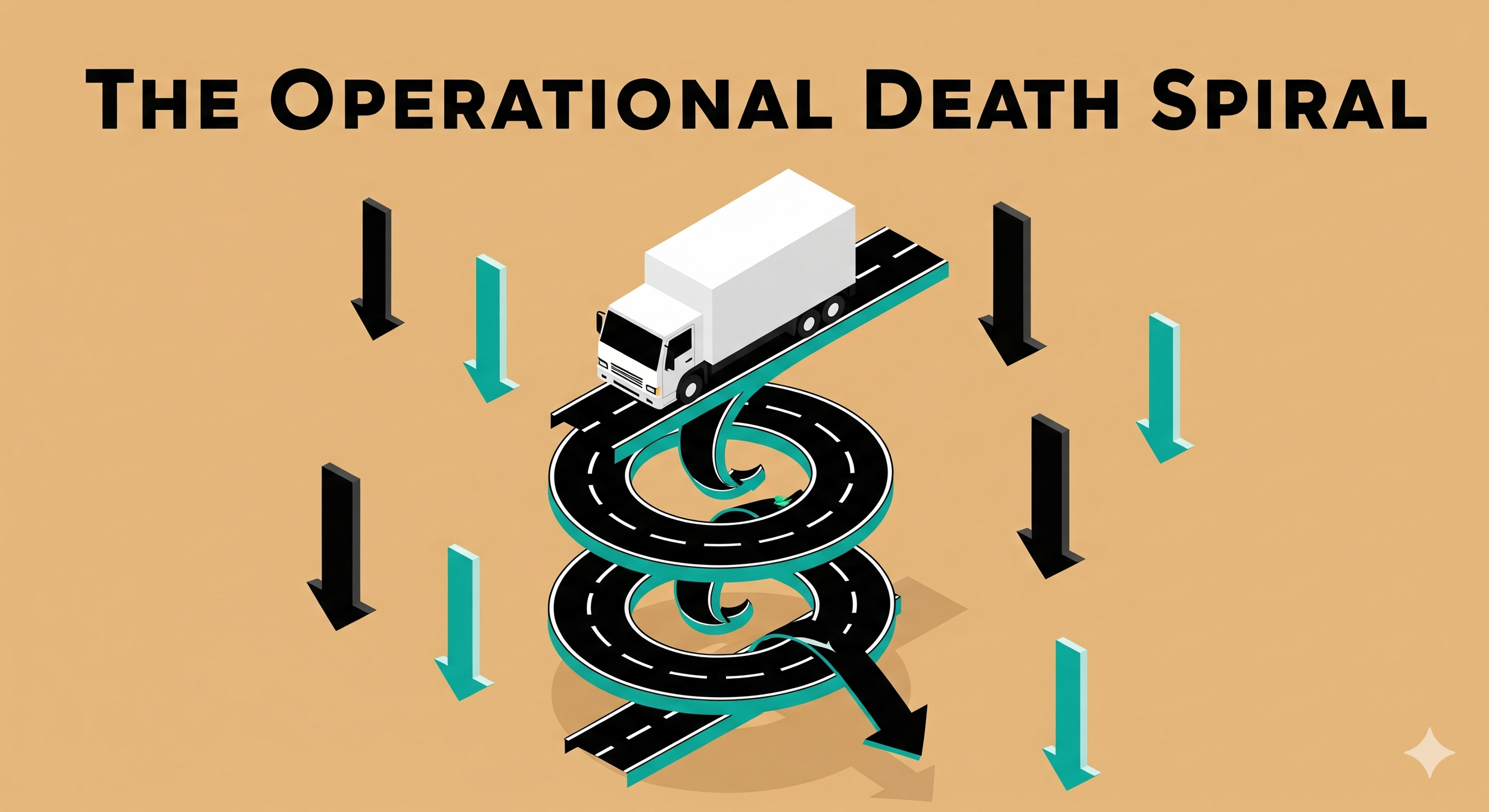
Why? It’s not because they don't know how to lift furniture. It’s because they fall victim to the Operational Death Spiral.
If you want to be part of the 38% that survives to Year 5 and beyond, you need to understand the anatomy of this failure loop—and, more importantly, how to break it.
What is the Operational Death Spiral?
Insolvency in the moving business is rarely a sudden event like an explosion; it’s a slow bleed. It usually happens in a specific feedback loop that we identified in our research:
The Trigger (Winter Dip): January hits. Revenue drops by 40% naturally due to seasonality.
The Knee-Jerk Reaction: To preserve cash, the owner cuts the easiest expense on the P&L: Marketing (Google Ads, Lead Providers).
The Lag: Operational costs (insurance, truck notes, warehouse rent) remain fixed.
The Result: Spring arrives, but because marketing was cut 90 days ago, the pipeline is empty.
Insolvency: Desperate for cash, the company takes high-interest debt or folds under the weight of fixed costs.
This spiral is predictable. It is mathematical. And it is entirely preventable.
Here is your battle plan to avoid the graveyard.
1. Build the "Winter War Chest" (July is for January)
The biggest mistake new owners make is treating July revenue as profit. In the moving game, Summer Revenue is borrowed from Winter Expenses.
The Fix: You must operate with a "Seasonality Tax." During your peak months (May–September), skim 10–15% of Gross Revenue off the top and deposit it into a separate, untouchable operating account.
Do not use this for a new truck down payment.
Do not use this for bonuses.
Do not touch it until December 1st.
This War Chest is what pays your insurance premiums when the phone stops ringing in February.
2. Marketing is Oxygen—Never Cut the Air Supply
When the Operational Death Spiral starts, your instinct will be to cut ad spend. This is suicide.
Marketing in the moving industry has a 30-to-90-day lag time. The leads you generate in February are your bookings for April. If you turn off the tap in winter to "save money," you guarantee an empty calendar in spring.
The Fix: Instead of cutting the budget, pivot the spend.
Winter Strategy: Shift focus from expensive "high-intent" leads (which are scarce in winter) to long-term SEO and brand awareness.
Retargeting: Aggressively market to your past customer database. It costs $0 to email your list about "Winter Storage Specials" or "In-Home Moving Services" (rearranging furniture for renovations).
3. Insulate Against the "Silent Killer" (Claims)
Our data shows that Net Margins in this industry are razor-thin (6–9%). A single catastrophic claim involves two costs:
The Deductible: Usually $2,500–$5,000.
The Premium Hike: One bad accident can double your insurance rates for 3 years.
For a company operating on 9% margins, a $5,000 deductible requires you to book an additional $55,000 in revenue just to break even on that one mistake.
The Fix: Training is cheaper than deductibles. Implement a strict "Pad-Wrap-Inside" policy and incentivize crews based on low damage rates, not just speed. Protect your insurance profile as aggressively as you protect your cash.
4. Know Your Numbers: The 40% Rule
If you don't know your Labor Load (Labor Cost / Revenue), you are driving blindfolded. In our research, successful companies keep labor (including taxes and workers' comp) under 35%. Failing companies often drift above 45%.
The Fix: Track labor daily. If a crew runs over hours on a flat-rate job, you didn't make profit—you paid for the privilege of moving someone's couch.
Audit your pricing: If your labor load is consistently high, your hourly rates are too low, or your estimators are under-quoting weight.
Conclusion
The Moving Mortality Curve is steep, but it filters out the unprepared. The companies that fail are the ones that treat this like a hustle. The companies that survive treat it like a math problem.
Don't let the Death Spiral catch you. Build your reserves, protect your pipeline, and respect the data.
Ready to master your metrics? Stay tuned to Moving Company Hustle for more industry insights, tools, and strategies to keep your trucks full and your margins healthy.
